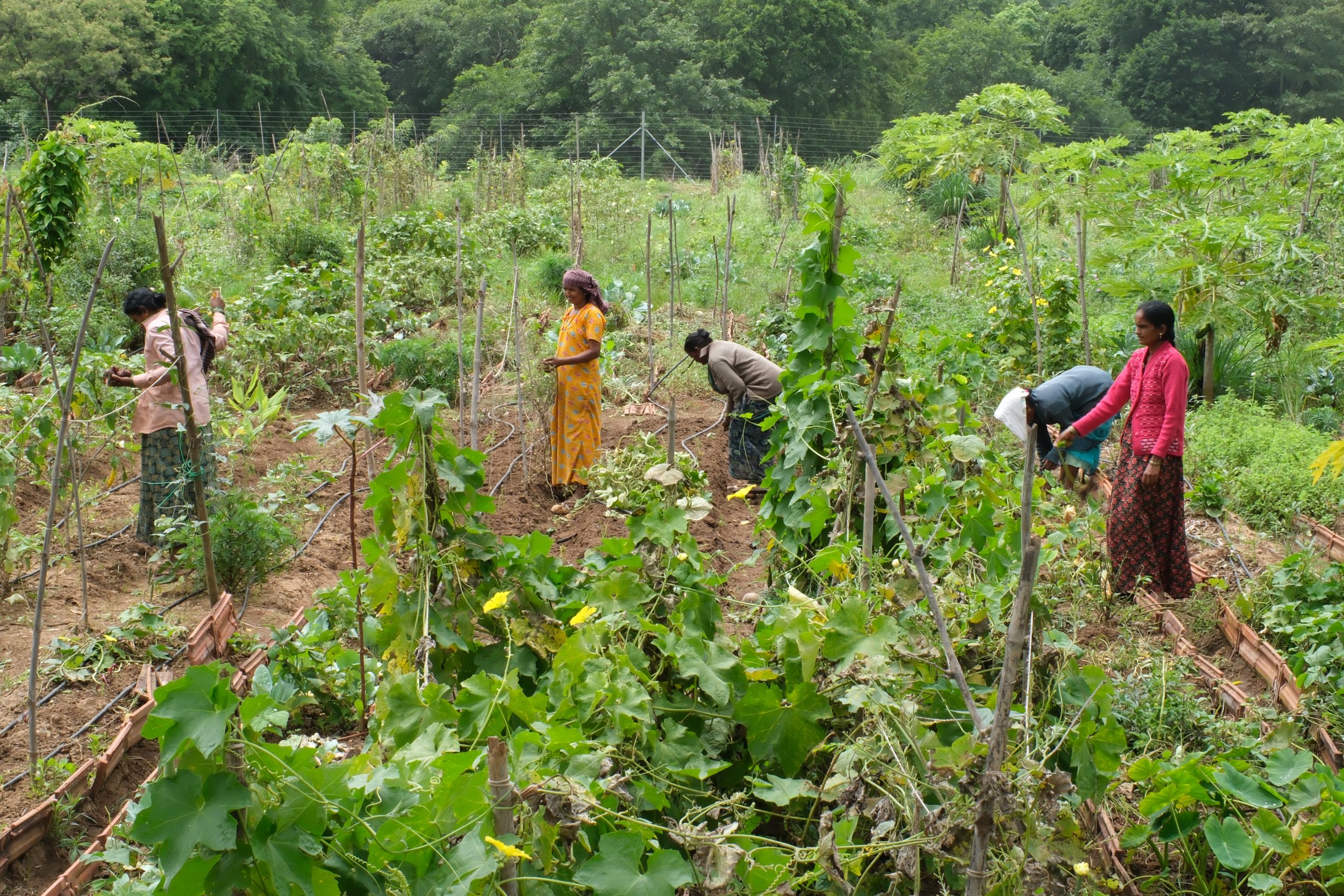
Tag: principles-and-community

  • What Makes Our Farm Thrive? 

    What Makes Our Farm Thrive? 

    Kai Thota is built on three promises that form the foundation of everything we do:

    1. Care for the soil and environment
    2. Nourish the people who eat from the farm
    3. Ensure dignity and safety for the women who grow the food

    Think of these promises like the roots of a strong tree – from them, everything else grows and flourishes. And, to live by these promises, we follow a way of farming called Permaculture. 

    01. What Is Permaculture? 

    The word permaculture may sound big, but the idea is simple- 

    • Notice what’s happening around you
    • Respect the natural systems at work
    • Care for the land, the community, and yourself

    Think of permaculture as building healthy relationships between all the living things on your farm. It’s like creating a circle where every part supports another:

    The soil feeds the plants > The plants provide food for animals and people > The animals enrich the soil > People tend the system and share its abundance = Everything works together!

    Permaculture works through three simple pillars that guide and anchor the practice

    Permaculture Pillars: Earth Care,
    People Care and Fair Share
    • Protect the soil, water, plants, and animals around you.
    • Treat the land as a partner, not just a resource.
    • Think of your actions as a promise to the Earth for the life it gives you.

    This means using natural fertilisers instead of chemicals, saving water, and planting in ways that maintain soil health and support different plants and animals living together.

    B. People Care Take care of each other

    • Support the well-being of all members of your community.
    • Share food, water, shelter, knowledge, and labor.
    • Build systems that allow people to thrive together.
    • Remember that thoughtful farming grows stronger when the community is cared for.

    ⭐ This involves helping each other with farm work, sharing resources, and making decisions together so no one is left behind.

    • Respect the limits of nature—don’t take more than your fair portion.
    • Share any extra food, energy, or resources so everyone benefits.
    • Give back to the Earth and community so the cycle continues.

    ⭐ This means sharing surplus harvest with neighbours, returning organic waste to the soil as compost, or using only the water you need so there’s enough for others and for future generations.

    Principles  

    It also has 12 key principles, which are like ‘rules of thumb’ that guide us in making decisions, designing farms, solving problems, and living in balance with nature and our surroundings. 

    The Rule In Practice An Example 
    Observe and Interact Notice where the sun shines longest, where water flows after rain, and which areas stay moist. By observing these patterns first, you work with nature instead of against it.Study which part of your farm gets morning sun before deciding where to plant. 
    Catch and Store Resources
    Save and store resources when there are plenty to use later Collect rainwater in a drum to water plants during hot and dry days.
    Obtain a Yield
    Make sure your efforts produce something valuable, where every activity should help your farm and your community.Plant vegetables or fruit trees to eat, share, or sell.
    Learn and AdjustLet your farm teach you what it needs.  Watch results and change your actions if needed.If plants consistently fail in one area, try shade-loving crops, or add manure 
    Use and Value Renewable ResourcesRely on resources that can naturally renew (things that come back naturally)  themselves, like sunlight, wind, and water.Use solar energy for your fences and pumps 
    Produce No Waste Find uses for everything- What seems like waste to one part of your system becomes food for another part.Turn weeds, peels, and scraps into compost to feed your soil instead of throwing them away.
    Look at the Whole,
    Then the Parts  
    Study your farm and its qualities carefully first, then plan the details—like where to plant and what to grow.Map water sources before deciding where to plant each bed.
    Together is Better  Create helpful relationships between different parts of your farmPlant flowers near vegetables to attract bees for pollination.
    Use Small and Slow Solutions Start simple and grow step by stepBegin with a few plant beds before creating a whole farm
    Value DiversityVariety brings strength and stability.Grow different types of crops and herbs together to reduce pests naturally.
    Use Every Part of Your Land Grow on field edges and use ignored land. There are benefits herePlant along fences or borders to make the most of space.
    Adapt to ChangeTurn challenges into opportunities and problems into creative solutions.If your soil is poor, add mulch and green manure to slowly improve it.

    02. Why Does This Matter For You?

    The big concepts of Permaculture trickle down to simple everyday practices that make life better for you, your farm, and your community. 

    Caring for soil protects future harvests. Growing different crops and welcoming birds, bees, and animals reduces pests naturally. Working together—sharing seeds, tools, and knowledge—saves money, time, and strengthens your community.

    These practices give you control over your food, including fresh vegetables for your family and extras to sell, making you less dependent on the market. Most importantly, they make you stronger against drought, floods, and price changes.


    03. How To Start Your Journey? 

    In the upcoming chapters, you will see how to use the principles of permaculture in small, simple steps on your own farm. 

    Every tip, every step, every decision is a way to strengthen your farm and community, without making big changes all at once.

    For now, you can start by adopting some of these key attitudes:

    • Become a Careful Observer:
      Spend time in your fields at different times of the day and different seasons. Notice where birds nest, which plants thrive where, and how water moves after rain. This observation becomes the foundation for all your decisions.
    • Take Responsibility for Your Part:
      Do your part on the farm and in the group. Learn from your work and help others do their best.
    • Practice Generous Sharing:
      Share seeds, tools, knowledge, and tips with your group. Help each other succeed.
    • Learn Through Trying:
      It’s okay to make mistakes. Try new ways, see what works, and improve over time.
    • Lead with Respect:
      Treat the land, plants, animals, people, and resources with care
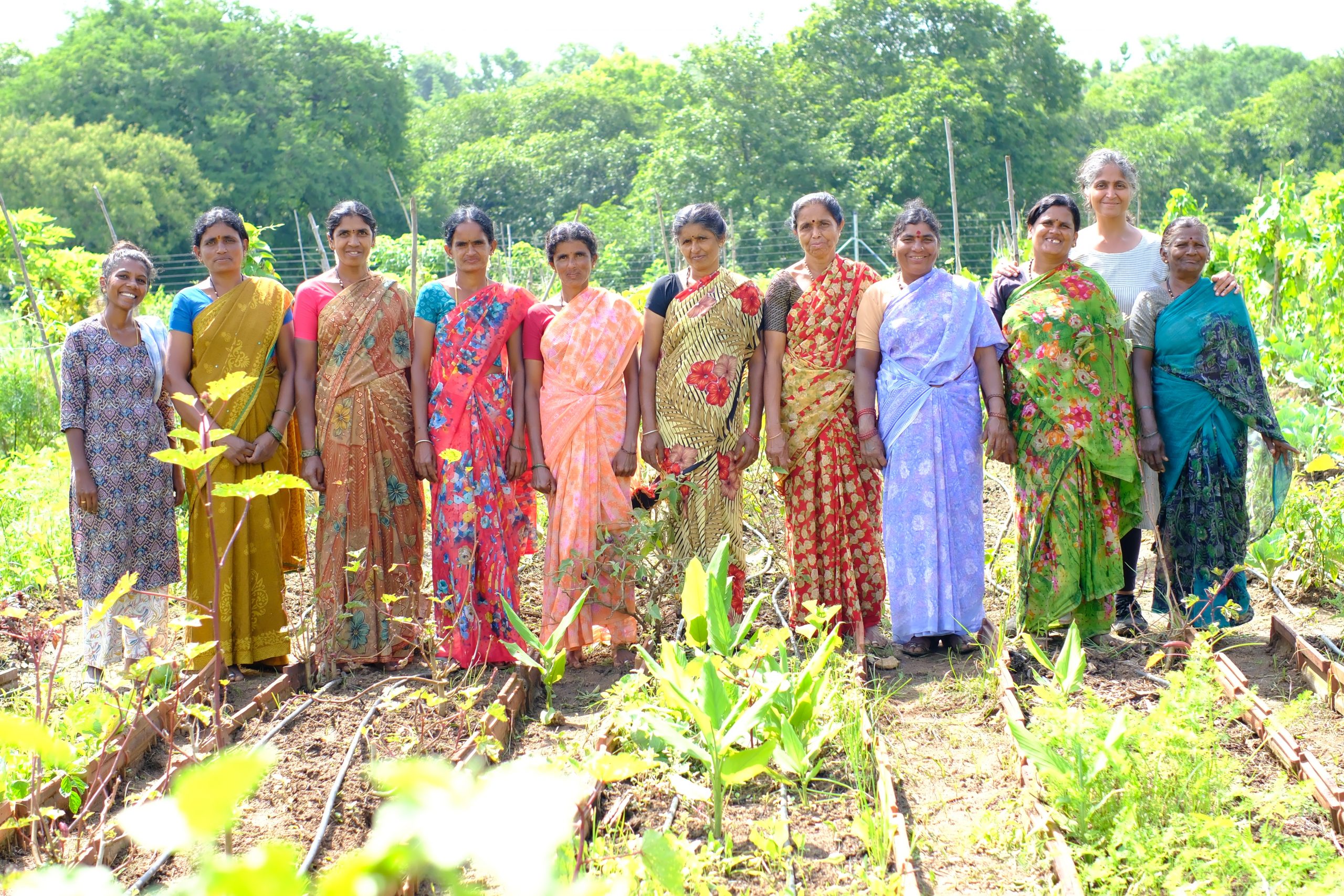
  • How Can You Organise A Collective?

    How Can You Organise A Collective?

    Organising a collective begins with people coming together. What matters most is not the form—whether it’s a savings group or simply neighbours—but the trust, shared values, and willingness to work side by side.

    Once that spirit is in place, everything else can follow: how you organise yourselves, how you share work, and how you seek support.

    01. Who Can Form a Kai Thota Collective?

    A Kai Thota collective can begin with existing Self-Help Groups (SHGs). Groups that already meet regularly and are built on trust, savings, and shared responsibility—making them a natural starting point for farming.

    But it doesn’t have to be an SHG. Any group that meets regularly with a shared purpose can become a farming collective:

    • Mahila Mandals or Kisan groups
    • A temple, church, or mosque congregation
    • A water user group
    • A local youth club
      Even a neighbourhood WhatsApp group

    What matters most is that people meet, talk, trust one another, and share common values—especially around working together, sharing labour, and respecting the land.

    💡 Tip
    If your group isn’t already formal, you can register it later as a joint Self-Help Group (SHG), a Farmer Interest Group (FIG), a Mutual Benefit Society, or a Cooperative. You could also just simply maintain a record of names, meetings and decisions. For many schemes, even this informal structure is enough to begin.

    02. What are Some Ways You Might Work Together?

    Once your group is formed, it’s important to agree on how decisions will be made and how responsibilities will be shared. This helps avoid confusion later and gives everyone a sense of ownership and clarity.

    Many Kai Thota groups follow simple practices inspired by SHGs:

    • Rotational leadership – Change roles every 3 to 6 months so that everyone learns and no one feels overburdened.
    • Basic bookkeeping – Use a ruled notebook or passbook to track income, expenses, meetings, and harvests.
    • Regular meetings – Meet weekly or every 15 days to plan work, solve problems, and review progress.
    • Helps guide the group and calls for meetings.
    • Tracks income, expenses, subscriber lists, and minutes of group discussions.
    • Communicates with the Panchayat, officials, or NGOs on behalf of the group.
    • Plans daily or weekly farm activities and makes sure work is divided fairly.
    💡 Tip
    You don’t need formal elections. Start with who’s comfortable, then rotate every few months.

    03. What might be important to talk
    about early on?

    Before starting farming as a collective, it’s important to sit together and discuss key topics. These conversations help everyone understand their role, avoid confusion later, and ensure the group works fairly and smoothly.:

    1. What to grow? And where?
    • Decide together which crops, vegetables, or plants you want to grow.
    • Look at the land and think about sunlight, soil, and water availability.
    1. How will produce or profits be shared?
    • Agree on a fair way to divide vegetables, fruits, or money from sales.
    • All members should share the produce and profits equally, regardless of their role or position in the group.
    1. What if someone misses farm work regularly?
    • Discuss rules for attendance and participation.
    • Decide how to support members who cannot come regularly due to work, health, or family duties.
    1. How will we include members who can’t read, write, or speak confidently?
    • Some members may not read, write, or speak confidently. Plan ways to include everyone in decisions and farm work.
    • Show how it’s done, explain it, and repeat instructions so everyone can learn by doing.
    • Pair less confident members with others for guidance and support.
    1. Other conversations to have- 
    • How to handle disputes or disagreements in the group.
    • Safety measures on the farm (tools, water, etc.)
    • Scheduling weekly or bi-weekly meetings to plan, review, and celebrate progress.


    04. How Can the Panchayat Support You? 

    Your Gram Panchayat is an important supporter. Many collectives succeed because they engage early and consistently with local governance. Your Panchayat can – 

    • Help you identify unused commons or public land
    • Approve small infrastructure works (like a compost pit, fencing, or bunds)
    • Recommend you for government schemes
    • Support you in applying for schemes or subsidies and also support large cluster development in case your group is eligible 
    • Connect you to horticulture officers for saplings or compost from the State Rural Livelihoods Mission (SRLM) or National Rural Livelihoods Mission (NRLM)
    • Speak to the Panchayat members, Panchayat Development Officer (PDO)/Gram Panchayat Level Federation (GPLF) coordinators about your intentions and needs
    • Attend Gram Sabhas & The Special Gram Sabhas (Jan 26, Aug 15, Oct 2) and present yourselves as a group
    • Present a simple plan:
      • Who you are
      • Why you want to farm together
      • What kind of land/support you need
    • Ask for a letter of support, even if verbal permission is already given.
    💡 Tip
    The group leader and record keeper can keep a small folder with the following information and documents, especially when presenting yourself to the panchayat:

    1. Group list (SHG or collective)
    2. Aadhaar photocopies of members
    3. A vert simple proposal in Kannada (2-3 paragraphs)
    4. Photos of the group members
    5. Bank account details (SHG or one lead member)
    6. An previous training or scheme registration documents (if applicable)

    Resources:

    Groups and Collectives- 

    • Self-Help Group
      A small group of people, typically 10–20 members, who save money together, provide small loans to members, and support each other financially and socially.
    • Farmer Interest Group (FIG)
      A group of farmers organised to collectively plan farming activities, share knowledge, and access resources or government schemes for agriculture.
    • Mutual Benefit Society
      A legally registered organisation where members pool resources or funds for shared benefit, often for livelihood or community development. 
    • Cooperative
      A formally registered group where people work together for farming, marketing, or business, and share profits and responsibilities.

    Government Programs and Missions- 

    • National Rural Livelihoods Mission (NRLM)
      A national program that helps poor families in villages form SHGs, earn income, and get skill training.
    • State Rural Livelihoods Mission (SRLM)
      The state-level program under NRLM that helps SHGs and farmer groups improve incomes and livelihoods.

    Local Governance- 

    • Panchayat members
      Elected members of the Gram Panchayat who make decisions and manage local village work.
    • Panchayat Development Officer (PDO)
      A government officer who helps the Panchayat plan and run village programs.
    • Gram Panchayat Level Federation (GPLF
      A group made by bringing together several SHGs in a village to coordinate, access schemes, and work collectively.
    • Gram Sabhas
      A meeting of all adults in a village to discuss development, resources, and schemes are discussed and approved.
    • The Special Gram Sabhas
      Gram Sabha meetings are held on national days such as 26 January, 15 August, and 2 October to discuss important village matters and present proposals for approval.