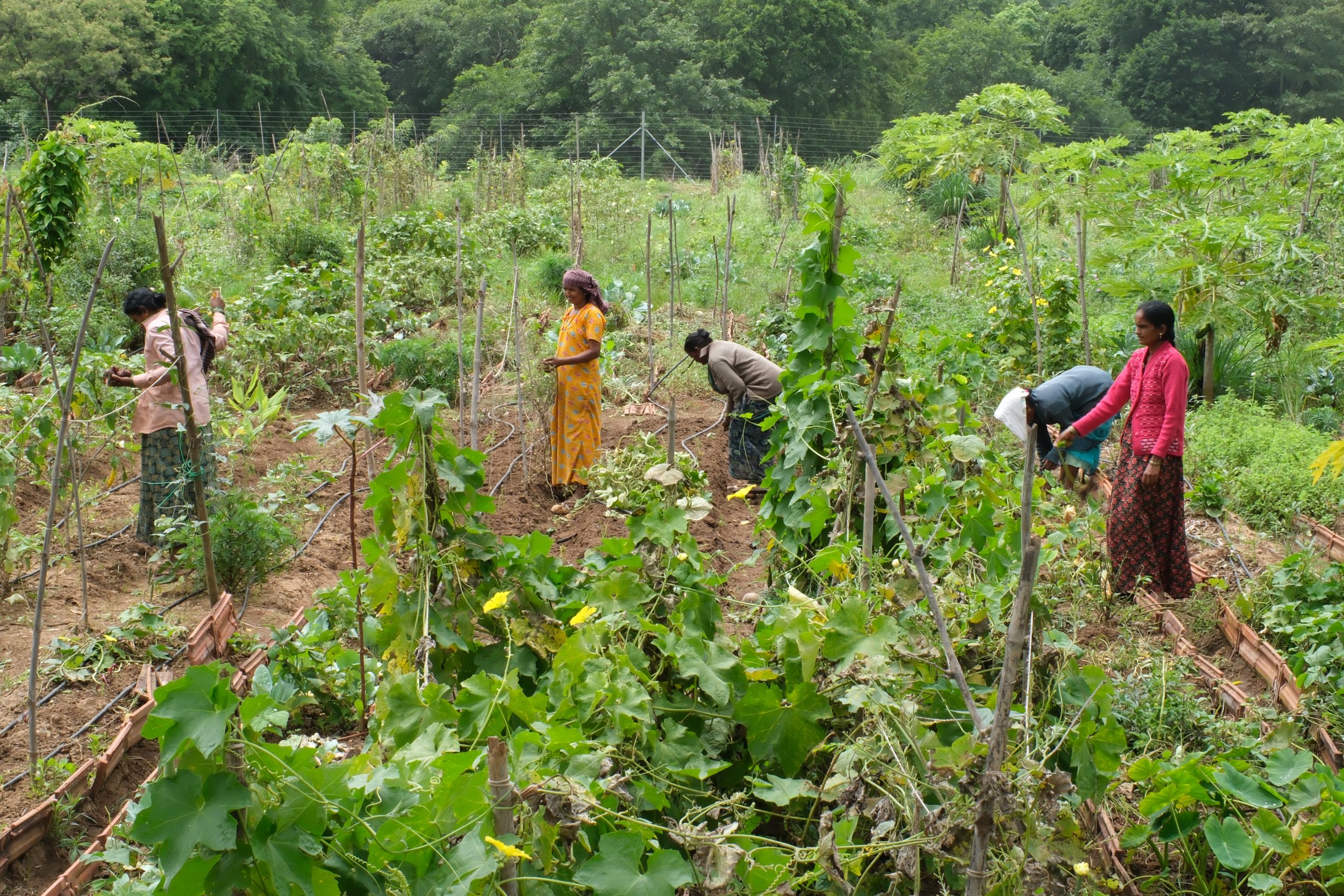
Kai Thota is built on three promises that form the foundation of everything we do:
- Care for the soil and environment
- Nourish the people who eat from the farm
- Ensure dignity and safety for the women who grow the food
Think of these promises like the roots of a strong tree – from them, everything else grows and flourishes. And, to live by these promises, we follow a way of farming called Permaculture.
01. What Is Permaculture?
The word permaculture may sound big, but the idea is simple-
- Notice what’s happening around you
- Respect the natural systems at work
- Care for the land, the community, and yourself
Think of permaculture as building healthy relationships between all the living things on your farm. It’s like creating a circle where every part supports another:
The soil feeds the plants > The plants provide food for animals and people > The animals enrich the soil > People tend the system and share its abundance = Everything works together!
Permaculture works through three simple pillars that guide and anchor the practice

People Care and Fair Share
A. Earth Care – Take care of the land
- Protect the soil, water, plants, and animals around you.
- Treat the land as a partner, not just a resource.
- Think of your actions as a promise to the Earth for the life it gives you.
⭐ This means using natural fertilisers instead of chemicals, saving water, and planting in ways that maintain soil health and support different plants and animals living together.
B. People Care – Take care of each other
- Support the well-being of all members of your community.
- Share food, water, shelter, knowledge, and labor.
- Build systems that allow people to thrive together.
- Remember that thoughtful farming grows stronger when the community is cared for.
⭐ This involves helping each other with farm work, sharing resources, and making decisions together so no one is left behind.
C. Fair Share (or Return the Surplus) – Take only what you need and share the rest
- Respect the limits of nature—don’t take more than your fair portion.
- Share any extra food, energy, or resources so everyone benefits.
- Give back to the Earth and community so the cycle continues.
⭐ This means sharing surplus harvest with neighbours, returning organic waste to the soil as compost, or using only the water you need so there’s enough for others and for future generations.
Principles
It also has 12 key principles, which are like ‘rules of thumb’ that guide us in making decisions, designing farms, solving problems, and living in balance with nature and our surroundings.
| The Rule | In Practice | An Example |
|---|---|---|
| Observe and Interact | Notice where the sun shines longest, where water flows after rain, and which areas stay moist. By observing these patterns first, you work with nature instead of against it. | Study which part of your farm gets morning sun before deciding where to plant. |
| Catch and Store Resources | Save and store resources when there are plenty to use later | Collect rainwater in a drum to water plants during hot and dry days. |
| Obtain a Yield | Make sure your efforts produce something valuable, where every activity should help your farm and your community. | Plant vegetables or fruit trees to eat, share, or sell. |
| Learn and Adjust | Let your farm teach you what it needs. Watch results and change your actions if needed. | If plants consistently fail in one area, try shade-loving crops, or add manure |
| Use and Value Renewable Resources | Rely on resources that can naturally renew (things that come back naturally) themselves, like sunlight, wind, and water. | Use solar energy for your fences and pumps |
| Produce No Waste | Find uses for everything- What seems like waste to one part of your system becomes food for another part. | Turn weeds, peels, and scraps into compost to feed your soil instead of throwing them away. |
| Look at the Whole, Then the Parts | Study your farm and its qualities carefully first, then plan the details—like where to plant and what to grow. | Map water sources before deciding where to plant each bed. |
| Together is Better | Create helpful relationships between different parts of your farm | Plant flowers near vegetables to attract bees for pollination. |
| Use Small and Slow Solutions | Start simple and grow step by step | Begin with a few plant beds before creating a whole farm |
| Value Diversity | Variety brings strength and stability. | Grow different types of crops and herbs together to reduce pests naturally. |
| Use Every Part of Your Land | Grow on field edges and use ignored land. There are benefits here | Plant along fences or borders to make the most of space. |
| Adapt to Change | Turn challenges into opportunities and problems into creative solutions. | If your soil is poor, add mulch and green manure to slowly improve it. |
02. Why Does This Matter For You?
The big concepts of Permaculture trickle down to simple everyday practices that make life better for you, your farm, and your community.
Caring for soil protects future harvests. Growing different crops and welcoming birds, bees, and animals reduces pests naturally. Working together—sharing seeds, tools, and knowledge—saves money, time, and strengthens your community.
These practices give you control over your food, including fresh vegetables for your family and extras to sell, making you less dependent on the market. Most importantly, they make you stronger against drought, floods, and price changes.
In short, Permaculture doesn’t just help the earth — it helps you too. It means healthier food, steady income, and community support, while keeping the land safe for you, your children, and future generations.
03. How To Start Your Journey?
In the upcoming chapters, you will see how to use the principles of permaculture in small, simple steps on your own farm.
Every tip, every step, every decision is a way to strengthen your farm and community, without making big changes all at once.
For now, you can start by adopting some of these key attitudes:
- Become a Careful Observer:
Spend time in your fields at different times of the day and different seasons. Notice where birds nest, which plants thrive where, and how water moves after rain. This observation becomes the foundation for all your decisions. - Take Responsibility for Your Part:
Do your part on the farm and in the group. Learn from your work and help others do their best. - Practice Generous Sharing:
Share seeds, tools, knowledge, and tips with your group. Help each other succeed. - Learn Through Trying:
It’s okay to make mistakes. Try new ways, see what works, and improve over time. - Lead with Respect:
Treat the land, plants, animals, people, and resources with care