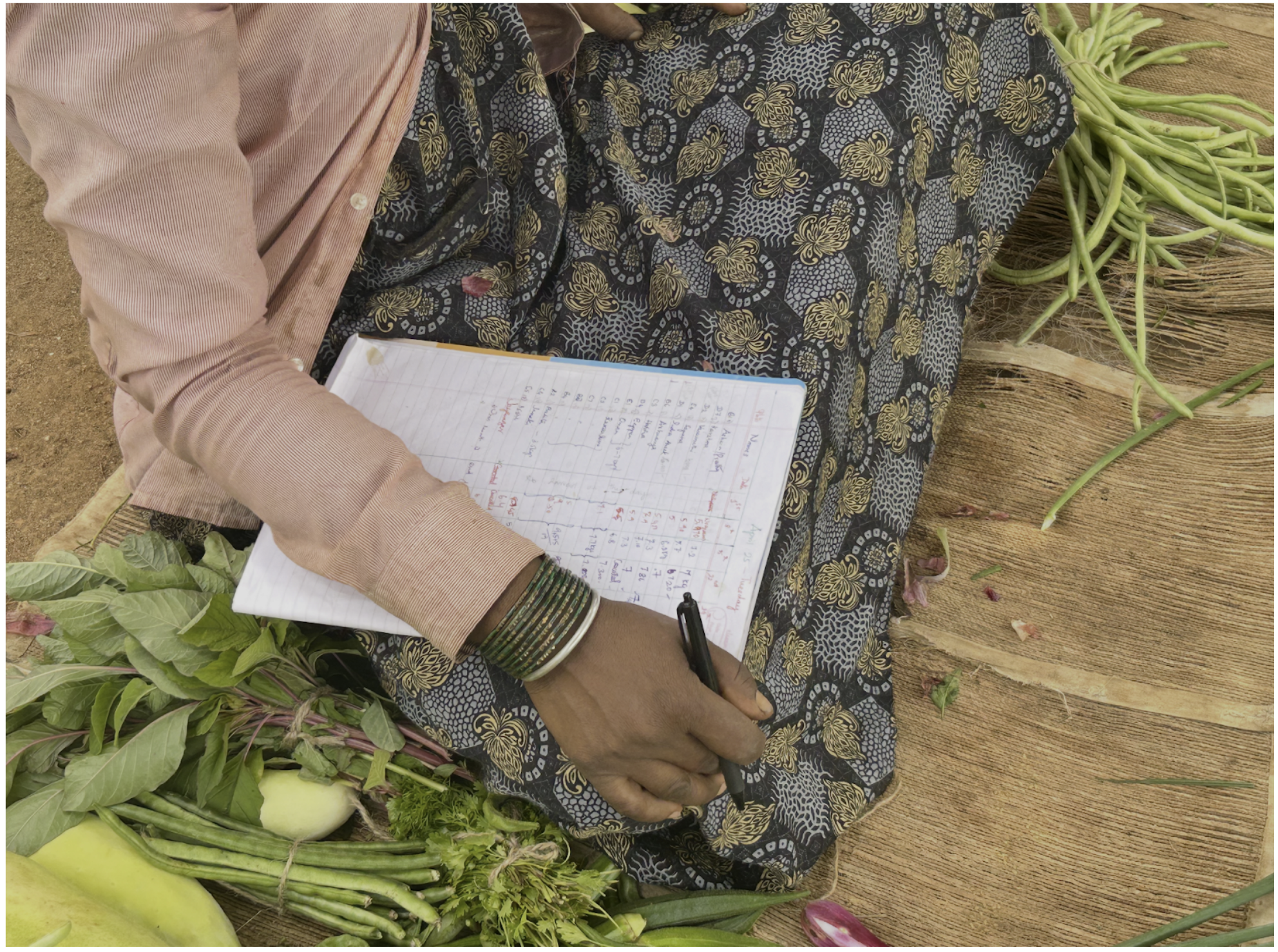
At the end of a farming cycle, it’s important to take a close look at how your farm performed—both in the field and in the pocket. Reviewing your crops, soil, water, and income helps your group spot what worked, catch issues early, and make better plans for the next season.
01. How Do You Keep Records on Your Farm?
Earlier, we saw how simple notes on germination, soil response, water flow, yield, and rainfall can guide better farming decisions. It’s worth repeating that consistent record keeping is one of the most powerful tools you have.
Why it matters now:
Your post-harvest review is only as strong as the notes you kept during the season. The records you made on germination, soil response, water flow, yield, and rainfall now become evidence you can use to:
- Review Monthly Patterns – Check which beds kept doing well and which ones struggled.
Example: If Bed A shows “Poor” soil response three months in a row → add compost or change the crop. - Compare Seasons – Spot differences between this year and last year’s harvest.
Example: Example: Did more rain mean fewer seeds sprouted? Did compost increase yields? - Plan Resources Better – Use yield and soil notes to decide seed, compost, and labor needs for the next cycle.
Example: If the irrigation system needs repairs, plan for the labor and time required to fix it before the next season. - Set Fair Prices – Rely on actual yield data to negotiate with confidence in the market.
- Catch Problems Early – Notice repeated weak spots and plan solutions like crop rotation or bed resting.
Example: If one bed keeps performing poorly, you can plan crop rotation or give the bed rest to recover. - Build Knowledge Over Time – Turn your notes into a farm history that guides smarter decisions each year.
Your records aren’t just notes — they are your farm’s history. The more carefully you keep and use them, the stronger your decisions will be every season.
02. How Do You Review Farm Finances?
At the end of a farming cycle, it’s important to see how your farm did—not just in crops, but also in money. Reviewing finances helps your group understand what worked, what didn’t, and plan better for the next cycle.
What Should You Record?
- Income: Money received from CSA subscribers, Santhe sales, or other buyers.
- Expenses: Seeds, compost, tools, water, transport, and labor costs.
- Savings or Surplus: Money left over after all expenses—this can be saved for the next cycle or used for group needs.
How to Review Your Finances Together?
- Bring your records: Have your notebook, receipts, or phone notes ready.
- Check each item: Compare what you spent and what you earned.
- Discuss as a group: Ask questions like:
- Which crops gave more income?
- Which costs were higher than expected?
- How can we reduce waste or save money next time?
- Decide together: Agree on how to use surplus money—buy tools, save for the next season, or support community needs.
| 💡 Tip |
| Keep it simple. Even small groups can track money in a notebook. The goal is understanding, not perfect bookkeeping. |