
Even after you’ve sown your seeds, the work isn’t done. This is the time when your soil needs the most care and attention. Healthy soil helps your plants grow strong roots, produce better harvests, and resist disease and stress.
Here’s how you can nurture your soil while your crops are growing and continue caring for it even after harvest-
1. How to Manage Your Soil As You are Producing?
Even after you sow your seeds, your job isn’t over. In fact, this is the time your soil needs the most care and love. Healthy soil gives you strong roots, better harvests, and crops that can fight off disease and stress.
Here’s how you can take care of your soil while your plants are growing. You can use a mix of:
- Solid inputs like compost and manure.
- Liquid inputs like Jeevamrutham or Gau Kripa Amrutham.
Solid Inputs
Solid inputs are things you mix into the soil. They break down slowly and feed the soil over time. This helps plants grow better without using chemical fertilizers.
1. Farmyard Manure
This is the traditional mix of cow, goat, or sheep dung that has been allowed to decompose completely.

- You can collect it from your farm or from your neighbors.
- It’s full of good microbes that keep the soil alive.
- When added to the soil, it helps roots grow strong and steady.
| 💡 Tip |
| Use only fully decomposed dung, not fresh one. Fresh dung can harm young plants. |
2. Compost
Compost is a natural fertilizer made at farm using:
- Kitchen waste (peels, leftover food, fish waste).
- Cow dung.
- Dry leaves, straw, and crop residue.

You can prepare it using:
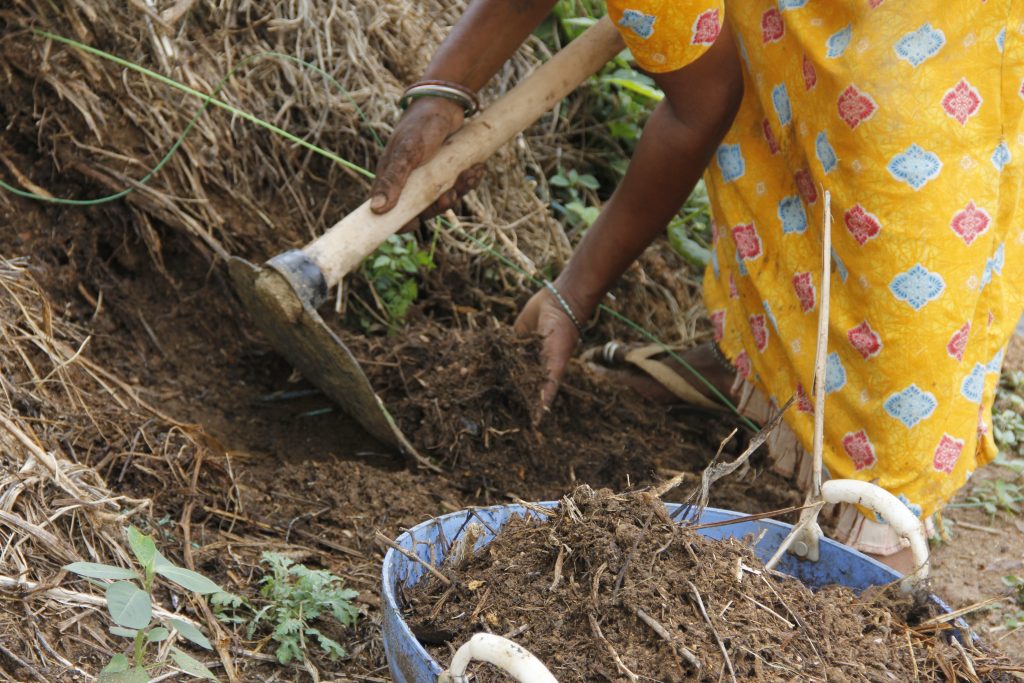
- Pit method: Dig a shallow pit about 2–3 feet deep. Layer wet items like vegetable peels or dung (greens) and dry items like dried leaves or stems (browns) one after the other. Keep the pile moist and cover it with dry grass or a jute sack to protect it from excess rain or sun.
- Heap method: Pile up the greens and browns directly on the ground in layers. Make the heap about 3–4 feet high. Cover and turn it every 10–15 days.
This compost helps by:
- Feeding the soil.
- Keeping it moist.
- Adding life to it.
- Saving money on fertilizers.
| 💡 Tip |
| Use a 2:1 ratio of greens (wet items like vegetable peels or dung) to browns (dry items like dry leaves or straw). Keep it moist and turn it every 10–15 days. In 2–3 months, you’ll get rich, earthy compost. |
3. Enriched Biochar
Biochar is like charcoal, but made specially for soil. To make it:
- Burn dry leaves, crop waste, or branches in a closed drum without too much air
📹 Watch this video on how to make biochar
To make it even better:
- Soak biochar in Jeevamrutham or Panchagavya. These are natural tonics made using cow-based ingredients that bring life to your soil.
👉🏽 Don’t worry if these names are new to you! You will get to know more about how to prepare and use Panchagavya and Jeevamrutham soon
- This fills it with friendly microbes.
Biochar helps by:
- Holding water and nutrients like a sponge.
- Making space for microbes to grow.
- Staying in the soil for years without breaking down
Liquid Inputs
Just like how we feel refreshed with a cool drink, plants also need to be refreshed with extra nutrition sometimes. That’s where liquid inputs help. They act faster than compost or manure. They can be sprayed on leaves, poured near roots, or mixed into drip irrigation. These natural tonics are easy to make using things like cow dung, urine, jaggery, buttermilk, or local herbs.
When you ferment these, they become natural tonics that:
- Feed the soil
- Boost plant immunity
- Keep away pests and diseases
Let’s look at the most common ones:
1. Gau Kripa Amrutham
Gau Kripa Amrutham is not just a liquid. It’s full of good bacteria that live in the soil and help plants grow strong.

Recipe (for 200 litres):
- 1 drum (200L) filled with 180-200 liters of water
- 2 litres of buttermilk (from native cow)
- 2 kg of jaggery (nattu sarkkarai)
- Panchagavya: A natural mix made from five things that come from cows: dung, urine, milk, curd, and ghee
- Local herbs: used in Ayurveda
How to prepare:
- Mix all in a drum
- Stir morning and evening for 5–7 days
- Keep in a shaded place, away from direct sunlight, by covering it with a jute sack
Usage:
- Mix with water and spray on the leaves, preferably in the morning (called foliar spray)
- Pour near the roots (called soil drenching). And it’s preferred to be done in the evening
- Add it to the drip line and make sure that you filter it well beforehand (called fertigation)
What does it do?
- Helps plants absorb nutrients better
- Makes them stronger against disease
- Makes the soil soft, airy, and full of life
- Helps rainwater soak into the ground
- Encourages bees, earthworms, and other helpful creatures to come back
| 💡 Tip |
| There’s no limit to reuse. This can be reused again and again.This works best with native cow dung and urine. Avoid using buffalo or foreign breeds. If not available, get from a nearby Gaushala. Try first on a small patch before large-scale use. |
2. Jeevamrutham
Have you heard the saying, “The soil also needs food”? Jeevamrutham is that food. It brings life back to tired soil and helps crops grow stronger.

Recipe (for 200 litres):
- 10 kg fresh cow dung (From native cow)
- 7 litres cow urine
- 2 kg jaggery (nattu sarkkarai)
- 2 kg cereal flour (like besan or millet flour)
- A handful of fertile soil (best from under a banyan tree)
- 180–200 litres clean water
How to prepare:
- Mix all in a drum
- Stir morning and evening for 5–7 days
- Keep in a shaded place, away from direct sunlight by covering it with a jute sack
- When it has a slightly sweet and sour smell, it’s ready! It will take 5 to 7 days.
Usage:
- Soil drenching (pouring it at the plant base – evening preferred)
- Foliar spray (diluted – early morning)
- Fertigation (after filtering)
- Seed soaking before sowing
| 💡 Tip |
| How to stir it? There’s no fixed rule. Some farmers prefer clockwise, some anti-clockwise, and others switch between the two. The important thing is to stir well!Foliar sprays are best done in morning and ground applications (like drenching), preferably in evening. |
Why do farmers love it?
- Easy to make, low cost
- Brings back earthworms
- Loosens soil and adds fertility
- Helps crops taste better and use less water
- Works for all kinds of crops such as veggies, grains, pulses, or trees
Jeevamrutham smells so good to earthworms, they travel up from 10 feet underground! They create tiny tunnels that keep the soil soft and full of air. Their waste also adds richness to the soil, helping it become more fertile and full of life.
3. Bio Enzymes
Have you ever thought that even fruit peels can feed your soil? That’s what bio-enzymes do! They turn kitchen waste into powerful natural fertilizer for your crops.
Bio-enzymes are full of good microbes that help soil breathe, boost plant growth, and keep pests away all without any chemicals. It’s one of the easiest and most affordable ways to care for your land naturally.
📹 Watch this video on how to make Bio Enzymes
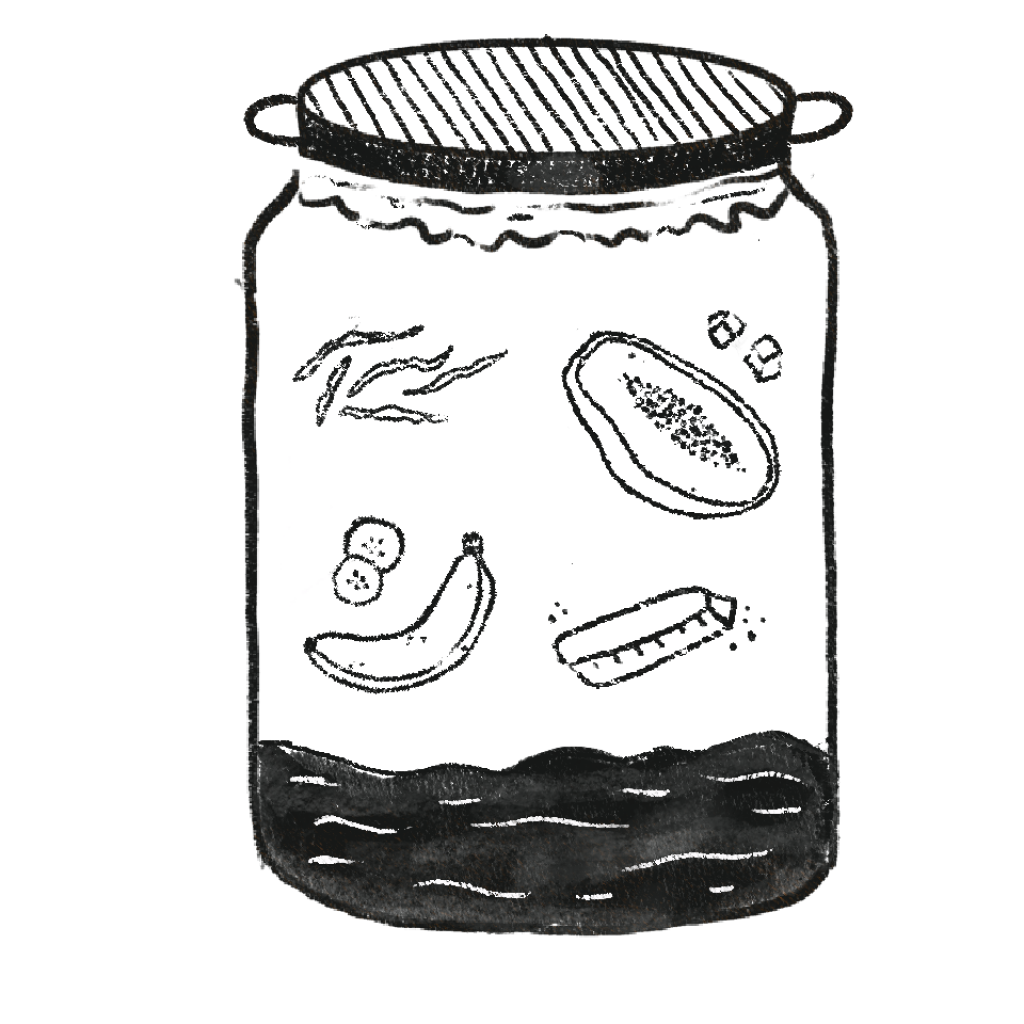
Recipe (for 10 litres):
- 3 kg fruit peels (any mix of citrus, banana, papaya, or vegetable scraps)
- 1 kg jaggery
- 10 litres clean water
How to prepare:
- Mix all three ingredients in a clean plastic drum or container.
- Leave some space at the top — fermentation produces gas!
- Cover the container loosely, or seal it with plastic wrap that has a few small holes to let gases escape. (If using a tight lid, open it slightly every few days to release pressure.)
- Stir the mixture once every 2–3 days for the first month.
- Keep the container in a shaded, cool place for about 3 months.
- Once fermentation is complete, the liquid will have a pleasant fruity smell — that’s your bio-enzyme!
- Strain and store it in clean bottles, sealed tightly for use.
Usage:
- Soil drenching: Mix 1 litre of bio-enzyme with 20 litres of water and pour near plant roots.
- Foliar spray: Mix 1 litre with 30 litres of water and spray early in the morning.
- Drip irrigation: Filter well and add to the drip system once in 10–15 days to improve soil health.
| 💡 Tip |
| The leftover fruit pulp can be added to compost or used again to make a fresh batch, nothing goes to waste! |
Why do farmers love it?
- Made from simple kitchen and farm waste
- Improves soil health and plant immunity
- Keeps pests away naturally
- Gives crops better taste and colour
- 100% eco-friendly and chemical-free
2. How Can You Keep Pests Away from Your Crops?
In organic farming, pest control is not about killing insects with strong chemicals. It’s about protecting your crops in a safe, natural way. Pest control is to be done as part of regular farm care, not just when there’s a problem.
Instead of buying chemical sprays, you can prepare homemade pest control liquids using leaves, cow dung, animal waste, and fermented mixtures.
i. Dashaparani (also called Dashakavya or Dashakavyam)
Dashaparani means “ten leaves.” It’s a traditional and powerful pest repellent made by fermenting 10 types of plants. These leaves are usually bitter, strong-smelling, or known to repel insects. It’s easy to make and widely used in organic farming.
📹 Click to watch this video on Dashaparani
How to Prepare Dashaparani:

Ingredients:
- 10 types of leaves (choose local bitter or strong-scented leaves):
Neem, Pongamia (honge), Datura (ummatte), Calotropis (ekka), Papaya, Custard apple, Castor, Guava, and Tulsi (or any locally available leaves known to repel pests) - Cow dung – 5 kg
- Cow urine – 10 liters
- Water – 30 liters
- Jaggery – 500 grams (to help fermentation)
- Turmeric powder
- Crushed Ginger, Garlic and Green Chilli
Steps:
- Separate the leaves from the stem.
- Put them in a barrel or drum with an open top.
- Add cow dung, cow urine, jaggery, and water.
- Add Panchakavya
- Add Crushed Ginger, Garlic and Green Chilli
- Mix well using a stick.
- Keep the drum in a shaded area and stir once a day (10–15 times, clockwise or anticlockwise).
- Let it ferment for 10–15 days.
After fermentation, the liquid will have a strong smell and turn dark. This is your Dashaparani Ark.
How to Use:
- Filter the liquid using a cloth.
- Mix 5 liters of Dashaparani with 100 liters of water.
- Spray it on crops early morning or late evening.
- Use once every 7–10 days or after rains.
| 💡 Tip |
| You can also apply it to the soil at the base of the plant to keep pests in check from the root. |