
Growing vegetables is only one part of farming. Making sure they reach the people who need them is just as important. Kai Thota farms focus on seasonal, chemical-free vegetables for local communities. That’s why it’s helpful to think early about who will buy your vegetables and how you will get them to your buyers, even before your first planting.
01. What Are Some Ways to Sell Your
Produce?
There are two main ways Kai Thota collectives sell their produce:
- CSA customers (Community Supported Agriculture): Local families, well-wishers, or urban supporters pay a fixed monthly amount and receive a weekly basket of vegetables. They support the farm throughout the season and share both the risk and the reward.
- Sante (Village Markets): Produce can also be sold directly in weekly local markets. This keeps the connection to traditional selling methods alive.
02. How Does Community Supported
Agriculture (CSA) Work?
In the CSA model, local families or individuals pay a fixed amount every month. In return, they receive a weekly bag of mixed vegetables grown by the collective, based on season and availability.

Fresh local produce from farms to families
What makes CSA different?
- Customers share the risk, meaning that even if the harvest is low due to weather or pests, they still pay.
- Farmers grow seasonal produce based on what the land supports and not what the market demands.
- There is trust between the customer and the farmer.
- Shared values of healthy soils, fair price and co-operation. If your consumers also believe in the same values, it makes selling produce easier.
📹 To learn more about Community Supported Agriculture, watch this video
What are the delivery options?
- Home Delivery – Convenient for customers, but you will need to plan the transport.
- Pickup Points – Vegetables are dropped at a common location (e.g. school, anganwadi, bus stop) and collected by customers. This is simple and saves effort for you, but it might be inconvenient for some customers
How to shape your CSA around your customers’ needs?
Not every customer can collect vegetables every single week. To make the CSA system work for everyone, Kai Thota collectives could offer simple options that ensure customers’ interests and the farmer’s income. For example:
- One-month pause: Each customer can skip one month per year without losing their spot on the farm.
- 12-month plan: Total cost is divided equally across 12 months, even if one month has no delivery. This keeps income steady and planning easy.
- Transferable bags (by group agreement): If a customer skips a week, they can gift their bag to a friend or neighbour. This keeps the produce in use and the connection active.
03. How Does Selling at the Santhe
(Village Market) Help?
Groups could also sell in the local weekly santhe. The prices may be fixed by the group based on the efforts and not necessarily based on the market prices. Unlike CSA, there is no risk-sharing, and the buyer pays for what they take. Good communication should be in place to ensure the customers understand the pricing and appreciate the transparency.
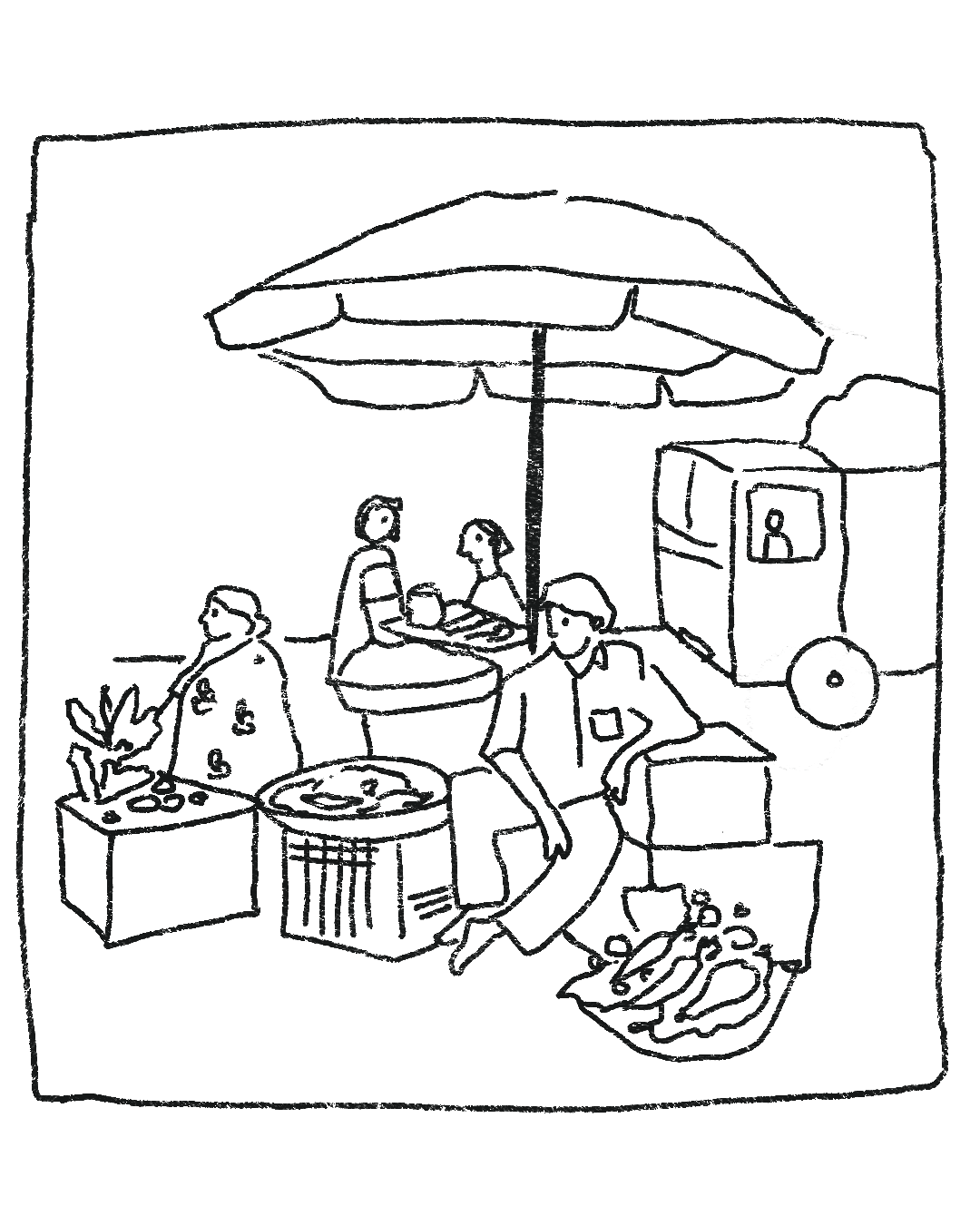
Santhe sales are useful for reaching new customers and avoiding waste, but income is less predictable than CSA.
04. How to Find Your First Customers?
Start by looking within your own network. You don’t need a long list; you could just begin with 8–10 committed people.
- If comfortable, use social media and local media to help you reach local buyers
- Ask friends, relatives, or neighbours in your village or nearby towns
- Reach out to SHG members in your area who may want weekly vegetables
- Speak to school teachers, Anganwadi staff, nurses, or local mess kitchens
- Post in community WhatsApp groups with photos and updates from the farm
- Connect with a local NGO or FPO that may help link you to urban buyers
| 💡 Tip |
| Make sure your price includes labour, transport, and input costs. More importantly, focus on building trust and long-term relationships. Your first customers (though a small group) are also your first supporters, who could promote your farm by telling others to become customers. |
Resources
Videos
📹 Community Supported Agriculture